Edgewater is transforming from a quiet waterfront neighborhood into Miami's emerging ultra-luxury address. If you're considering a pre-construction purchase at Villa Miami or anywhere in Edgewater, understand the market forces shaping this neighborhood and why institutional capital is moving in. This isn't hype. It's documented by developer activity, purchase prices, and capital flow patterns.
The Edgewater Advantage: Why It's Emerging as Miami's Luxury Waterfront
Edgewater sits at a unique moment in Miami's real estate cycle. Three factors create opportunity:
1. Constrained Waterfront Supply
Miami's prime waterfront is nearly fully developed. Brickell's waterfront is built-out (St. Regis, Mandarin Oriental, Icon Brickell, etc.). Coconut Grove's waterfront is built-out (Grove at Grand Bay, Park Grove, Mr. C Residences, etc.). South Beach oceanfront is maxed. The only significant waterfront with developable land is Edgewater, and the supply is limited. When supply is scarce, prices rise. This is fundamental.
Edgewater has roughly 15-20 more years of development potential before it's fully built. By 2035-2040, Edgewater waterfront will be as fully developed and as expensive as Brickell is today.
2. Early-Stage Luxury Cycle
Edgewater is earlier in its luxury neighborhood development cycle than Brickell or Coconut Grove. Think of Brickell in 2005, when pre-construction was active and the neighborhood was still forming. Institutional developers (Terra, Nans Living, Antonio Citterio) are targeting the neighborhood simultaneously, that's the signal that capital believes in Edgewater's trajectory.
3. Institutional Capital Flow
Major developers don't build in neighborhoods by accident. In 2024-2026, major developer capital is flowing to Edgewater specifically. Project launches:
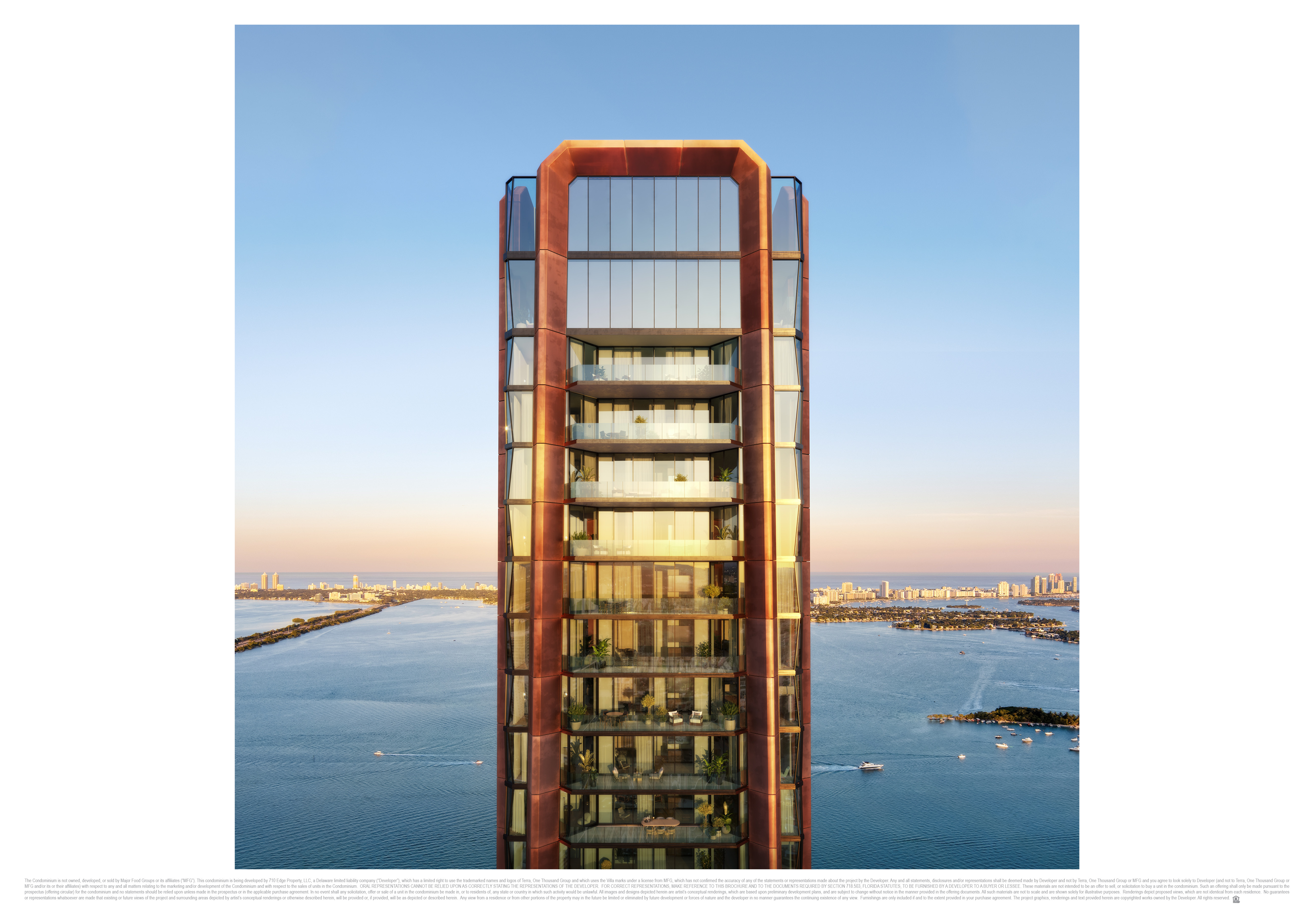
- Villa Miami (Terra/One Thousand Group): 55 stories, $6M+ entry pricing
- Nans Miami (Nans Living): Ultra-luxury development with contemporary positioning
- Arte by Antonio Citterio (acclaimed Italian designer): Design-forward luxury project
- Miami River Developments: Multiple riverfront and bayside projects in planning/development
This isn't one developer; it's multiple institutional players betting on the same neighborhood simultaneously. That convergence signals capital confidence in Edgewater's future.
Edgewater vs. Competing Miami Neighborhoods: Pricing & Development Stage
| Neighborhood | 2026 Entry Price (SF) | Dev. Cycle Stage | Supply Status |
|---|---|---|---|
| Brickell | $3M-$5M | Mature | Built-out |
| Coconut Grove | $2.5M-$4M | Mature | Built-out |
| South Beach | $8M+ | Mature | Fully constrained |
| Wynwood | $4M-$6M | Growth | Limited |
| Design District | $5M-$8M | Growth | Limited |
| Edgewater | $6M+ | Early-growth | Constrained |
Edgewater sits earlier in its development cycle than mature neighborhoods (Brickell, Coconut Grove), and unlike inland growth areas (Wynwood, Design District) it has waterfront scarcity.
Price Per Square Foot Comparison
On a per-SF basis, Edgewater is still less expensive than South Beach oceanfront ($1,500-$2,000/SF in Edgewater vs. $2,200-$2,800/SF in South Beach), but it's commanding a premium over non-waterfront Brickell ($1,200-$1,500/SF). The premium is justified by waterfront positioning and neighborhood trajectory.
The trade-off: you're paying for waterfront, at a lower price per square foot than South Beach oceanfront for comparable quality and design.
Development Pipeline & Infrastructure: The Drivers of Future Growth
Residential Development
Beyond the three major projects mentioned, the Miami River waterfront (adjacent to Edgewater) has multiple development sites in planning phases. The river is being redeveloped as a dining, cultural, and residential destination. Proximity to a revitalized Miami River adds lifestyle and commercial value to Edgewater addresses.
Transportation & Connectivity
Edgewater has immediate access to the Venetian Causeway (connecting to Miami Beach) and the Julia Tuttle Causeway (connecting to Miami Beach from the north). The Design District is 10-15 minutes west. Wynwood is 15 minutes. Airport is 25 minutes. Public transit is limited compared to Brickell, but the Metromover connectivity and bus system serve the area.
A major infrastructure project to watch: potential improvements to Edgewater's public transit access and streetscape. If Miami invests in neighborhood street improvements (which often follow major development), Edgewater's walkability and lifestyle appeal increase further.
Retail & Dining Evolution
Edgewater currently has less retail density than Brickell, but it's emerging. New developments are including ground-floor retail: restaurants, boutiques, fitness studios. Villa Miami itself includes a Major Food Group restaurant. As more projects deliver, the retail ecosystem densifies. By 2028-2030, Edgewater's restaurant and retail scene will be significantly more robust than today.
Who's Buying in Edgewater? Investment Thesis
Edgewater buyers fall into distinct categories:
Domestic Ultra-High-Net-Worth Individuals
American billionaires and high-net-worth individuals (hedge fund managers, entrepreneurs, real estate investors) are buying Edgewater waterfront for primary residences and investment. The neighborhood's exclusivity and waterfront positioning appeal to this demographic. They're drawn to contemporary design, private amenities, and the brand-name developments.
International Luxury Buyers
Europeans, South Americans, and Middle Eastern buyers see Edgewater as Miami's emerging ultra-luxury address. For international buyers, Edgewater represents entry into Miami's primary waterfront market at a value point below South Beach. Currency, visa, and diversification considerations drive this interest.
Developer-Track Investors
Real estate investors buying based on developer track record. They see Terra's history (Grove at Grand Bay, Park Grove, Eighty Seven Park) and recognize that developer's ability to execute and deliver. These buyers typically plan to hold 5-7 years.
Pied-a-Terre & Vacation Home Buyers
High-net-worth individuals buying Edgewater as part of portfolio diversification. Own in New York, Los Angeles, New York, and Miami. Edgewater's waterfront lifestyle and emerging status appeal to this category.
Investment Timeline: Why 2026 Matters
We're at an inflection point. Villa Miami, Nans Miami, and Antonio Citterio's project are all launching presale in 2025-2026. This is the window to establish your position in Edgewater before the neighborhood fully transforms and becomes as established (and expensive) as Brickell is today.
Historical parallel: In 2005, Brickell was emerging. Pre-construction pricing for first-movers ranged from $2M-$3M for comparable square footage. Past results in Brickell do not predict results in Edgewater.
Early buyers get first choice of lines, floors, and views at current release pricing.
Risk Factors: What Could Change the Outlook?
Be clear-eyed: No investment is risk-free. Edgewater's positive trajectory assumes:
- Continued institutional capital flow: If developers redirect capital elsewhere, growth slows
- No major economic recession: A 2008-scale recession would impact all Miami luxury markets
- No local policy changes: Changes to zoning, environmental regulations, or tax policy could impact development
- Continued wealthy migration to Miami: If migration trends reverse, demand softens
- Developer execution: If major projects fail or delay significantly, confidence erodes
These risks are real but manageable. The base case is that institutional capital continues, no major recession hits (and if one does, it affects all Miami neighborhoods equally), and developers execute. That's what the market pricing suggests.
The Bottom Line
Edgewater is emerging as Miami's primary ultra-luxury waterfront address because of constrained waterfront supply, early-stage development cycle, and institutional capital flow. No appreciation is promised; buyers who plan to hold through 2030-2035 should weigh delivery timelines and market risk.
Comparison to Other Miami Neighborhoods in 2026
If you're choosing between Edgewater, Brickell, South Beach, Design District, and Coconut Grove, here's how to think about it:
Choose Edgewater if: You want waterfront position, contemporary design, and don't mind slightly less retail/walkability than Brickell. You're willing to wait for the neighborhood to fully develop (3-5 years).
Choose Brickell if: You want immediate walkability, established neighborhood, proven market, and lower entry prices. You gain stability.
Choose South Beach if: You want iconic oceanfront positioning and you're buying for lifestyle and prestige.
Choose Design District/Wynwood if: You want an emerging neighborhood but don't need waterfront views. These neighborhoods lack the waterfront scarcity Edgewater has.
Each neighborhood serves different investor profiles and timelines. Edgewater serves investors who believe in early-cycle positioning and waterfront scarcity premium.